
What the Ionia County Probate Court Handles
Probate is the branch of the trial court that deals with people, estates, and protective arrangements. In Ionia County, the Probate Court hears estates, trusts, and wills, along with guardianships for adults, minors, and developmentally disabled persons. It also handles conservatorships and protective orders for both adults and minors. Mental health treatment matters and secret marriage records round out the core probate docket. The court is led by Judge Robert S. Sykes, Jr., and its day-to-day filings run through Probate Register Sallie Possehn.
The same bench also carries a wide set of family-court matters. Adoptions, child protection proceedings, emancipations, juvenile delinquencies, juvenile guardianships, juvenile personal protection orders, and name changes are all heard here. That mix means the Ionia County Probate Court touches some of the most sensitive files in the county. It is not only about wills and estates. It reaches into guardianship of a child, care for an incapacitated adult, and the quiet paperwork of a name change.
Because probate covers both open estate files and confidential family matters, access rules shift from one case type to the next. A closed estate reads very differently from a juvenile file. The sections below sort the open channels from the restricted ones.
Probate Terms Defined
Probate filings use a small set of words that show up again and again. Reading a docket goes faster once these terms are clear. The short glossary below covers the labels most often seen on an Ionia County probate case.
- Testator
- The person who wrote and signed the will. When that person dies, the will they left behind opens the estate.
- Executor
- The person named in the will to gather assets, pay debts, and carry out the wishes in the document. Michigan filings often call this role the personal representative.
- Intestate
- Dying without a valid will. The estate is then split under state law rather than by the wishes in a signed document.
- Guardianship
- A court arrangement that gives one person legal authority over the care and daily decisions of a minor or an incapacitated adult.
- Conservatorship
- A court order that puts one person in charge of another person's money and property when that person cannot manage it alone.
How to Search Ionia County Probate Records
Ionia County does not run a separate county-owned probate database. Public lookups route into the statewide MiCOURT case search, which carries circuit, district, and probate matters. The probate files live under their own case-type category, so you pick the probate category rather than mixing them with civil or traffic dockets. A terms gate loads before the search fields appear. After that, a name or case number gets you into the index.
The search accepts a case number, a first name, and a last name, plus filters for case year, case status, and case public status. That last filter matters for probate, because suppressed matters will not open for the general public. Michigan also publishes its broader records-management standards that shape how long files are kept and how they are indexed.
- Open the MiCOURT public case search and accept the terms page.
- Choose the probate case-type category so the search stays inside probate matters.
- Enter a party name or the case number, then add a case year to narrow a common name.
- Review the result list, noting that suppressed or restricted matters may not appear.
- If the file is not online, call or visit the Ionia County Probate Court office for in-person help.
Note: Some probate matters carry a suppressed public status, so a missing result may mean the record is protected rather than that it does not exist.
Visiting the Ionia County Probate Court
When the online index is not enough, the court office is the next stop. The Ionia County Probate Court staff, including deputy probate registers Stephanie Bennett and Karen Bota, handle filings, copy requests, and questions about pending matters. The office keeps standard weekday hours and shares the downtown courthouse address with several other county court functions.
Ionia County Probate Court
100 West Main Street
Ionia, MI 48846
(616) 527-5326
Fax: (616) 527-5321
Monday to Friday, 8:30 a.m. to 5:00 p.m.
The court also posts jury information for probate jurors. Terms run three months, and the court says an up-to-date jury trial schedule is available after 5:00 p.m. on weekdays or anytime on weekends by phone. Jurors who want email notice can request it by writing to kbota@ioniacounty.org.
E-Filing Ionia County Probate Cases
One of the biggest recent changes to Ionia County probate practice is electronic filing. Starting June 12, 2025, the Ionia County Probate Court became a MiFile court. Attorneys who submit filings for eligible probate case types must now e-file under Michigan Court Rule 1.109(G)(3)(f). The court points those filers to TrueFiling, the state e-filing platform, and to a MiFile information poster.
The shift matters for records, not just for lawyers. E-filed probate documents become part of the electronic case workflow rather than a paper-only file in a drawer. That tends to make indexing and later lookups more consistent. Self-represented filers and the general public are not shut out, but attorneys handling estates, guardianships, and conservatorships should plan for the e-file requirement rather than a walk-in paper submission.
Filing and Access Channels for Ionia County Probate Records
The county does not publish a flat probate fee sheet on its public pages, and inventing dollar amounts would not help anyone. What the research does support is a clear map of where each matter is handled and how to reach it. The table below lays out the practical access channel for the main Ionia County probate record types. Copy and certification costs are quoted by the court office at the time of the request.
| Matter | How to Access |
|---|---|
| Estate, will, or trust file | Search the probate category in MiCOURT, then the court office for copies. |
| Guardianship or conservatorship | Court office; some detail is limited when a minor is involved. |
| Attorney probate filing | E-file through TrueFiling under the MiFile rule. |
| Certified or plain copy | Request from the Probate Court office by phone, mail, or in person. |
| Mental health, adoption, or juvenile matter | Restricted; handled through the court under privacy law. |
For vital-record style copies tied to marriage or death rather than probate, the county routes many requests through the Ionia County Clerk's office instead. Knowing which office holds a document saves a wasted trip.
What Ionia County Probate Records Show
An open probate file tells the story of an estate from start to finish. It often includes the petition that opened the case, the will if one exists, the order appointing a personal representative, and the letters of authority that let that person act. Inventories list what the estate holds. Accountings show money in and money out. Final orders record how property was distributed and when the file closed.
Guardianship and conservatorship files read differently. They carry petitions, reports about the protected person's condition, and orders granting or limiting authority. Because these files involve a living person's care and finances, some pages are kept out of general view. The public index may confirm that a case exists while shielding the sensitive medical or financial detail inside.
Estates also intersect with debts, and debts sometimes cross into the federal system. Bankruptcy is handled in federal court, not the county probate court, and that boundary is easy to miss. The federal Western District of Michigan bankruptcy court shows how estate-related debt matters live in a separate court entirely.
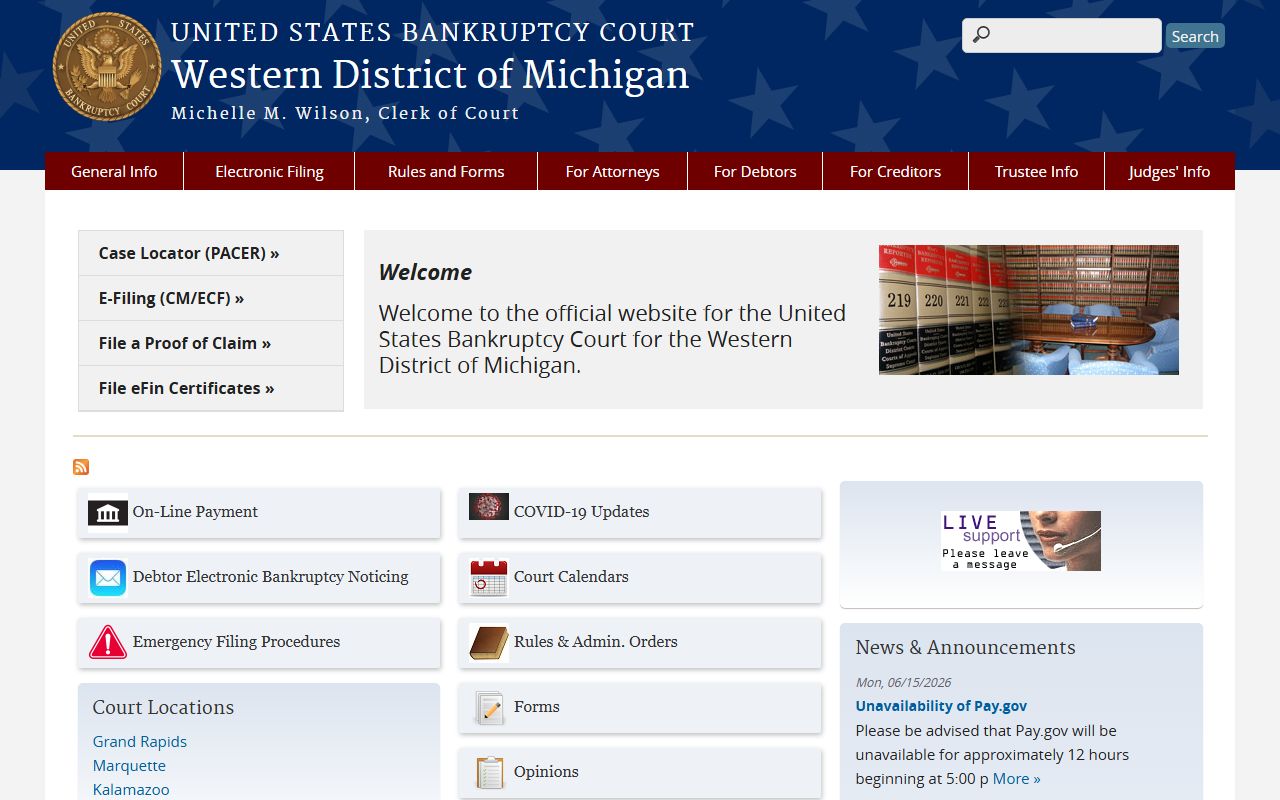
That bankruptcy court handles debtor estates and creditor claims that a county probate estate never reaches. When an Ionia County estate carries heavy debt, the two systems can touch, but the probate record itself stays with the county court.
Federal Courts and Ionia County Estate Matters
Most probate work is purely local, yet readers often confuse the county probate court with the federal courts that also sit in western Michigan. They are not the same, and neither one runs the other's records. Ionia County falls inside the federal Western District of Michigan, whose boundaries and county list are published by the U.S. Attorney's office. That geography explains why some federal matters tied to a resident's affairs land far from the Ionia courthouse.
The Western District boundary page lays out which counties the district covers. It is a useful reference point, but it is a federal source, not the Ionia County probate portal.
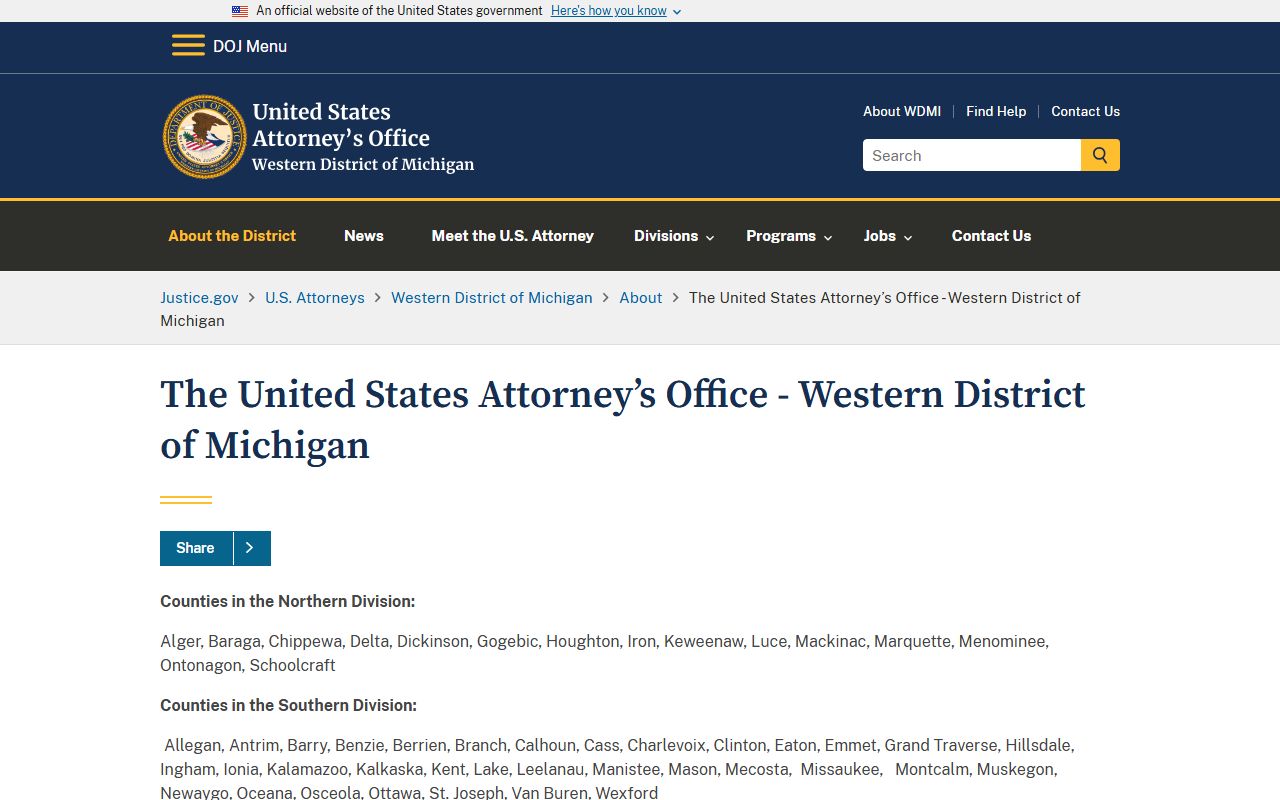
Seeing the district map makes the split clear. Estate and guardianship files stay with the Ionia County Probate Court, while federal filings belong to a different building and a different clerk. If a matter ever does reach federal court, the physical courthouse is elsewhere.
The federal court publishes its courthouse locations for the Western District. That list points to Grand Rapids and other federal sites, none of which handle Ionia County probate.
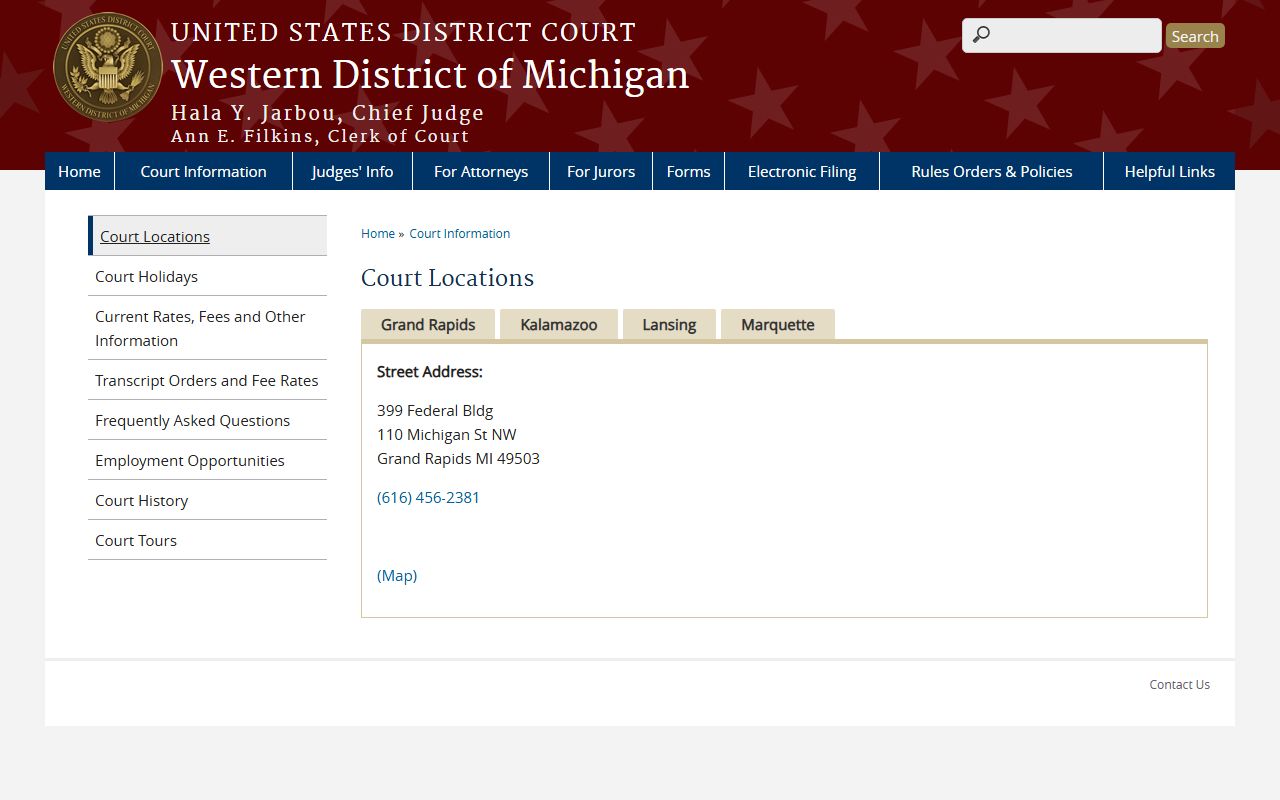
Those addresses matter only for federal business. For a will, an estate, or a guardianship in Ionia County, the West Main Street probate office remains the right door.
Restricted Ionia County Probate Records
Not every probate matter is open to the public. The Ionia County Probate Court holds some of the most protected files in the county, and the search system reflects that. When a record does not appear, the honest reading is often that it is unavailable in the public search, not that it never existed. Privacy law, sealing, and the stage of a proceeding all keep certain matters out of view.
Juvenile matters are the clearest example. Access to juvenile records is limited by statute, and the public search may suppress those files or show only a thin outline. The controlling rule is set out in Michigan's juvenile-record access statute, which governs who may see these files and under what conditions.
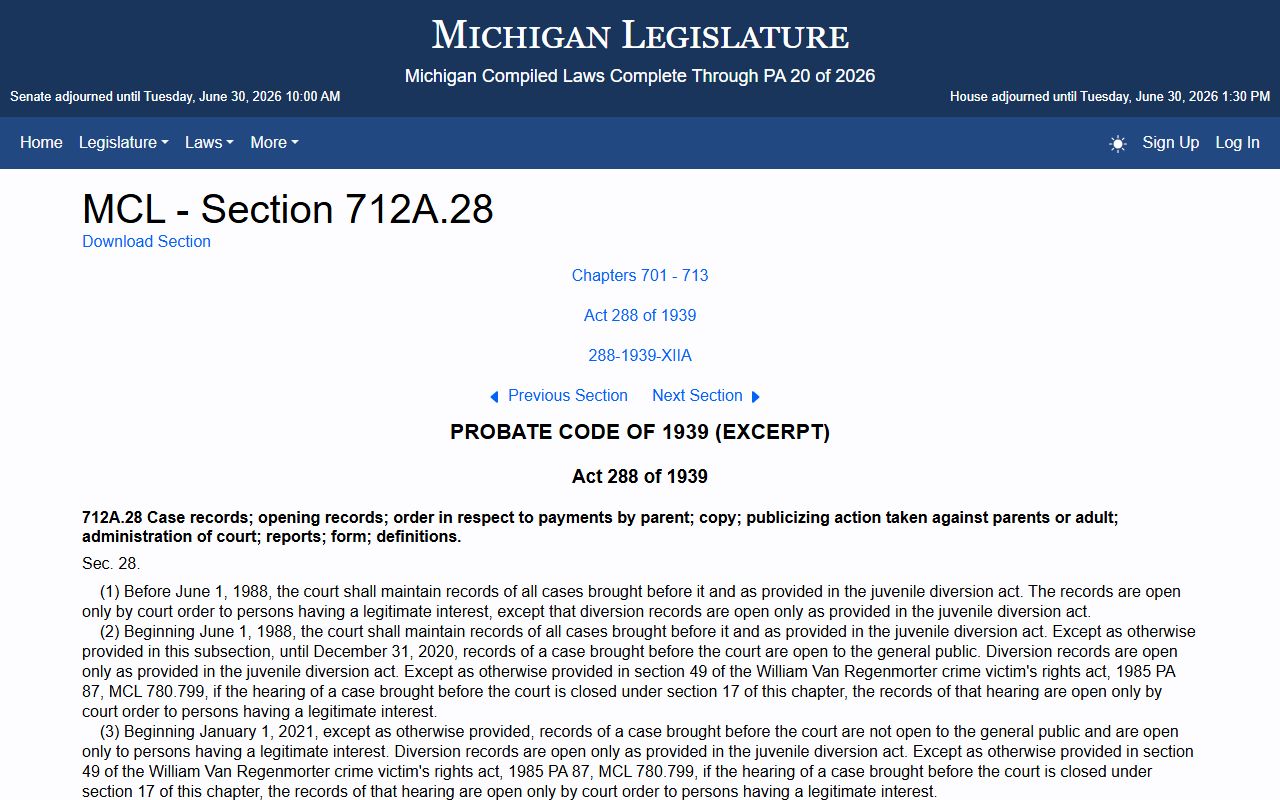
That statute is why a juvenile delinquency or juvenile PPO file behaves so differently from an ordinary estate docket. The following probate-related categories are commonly restricted or confidential:
- Mental health treatment matters heard in probate.
- Adoption files and child protection proceedings.
- Secret marriage records held under probate jurisdiction.
- Juvenile delinquency and juvenile personal protection order files.
- Any case flagged with a suppressed public status in MiCOURT.
Note: Secret marriage records and confidential family matters sit alongside open estates in probate, so treat the court's index as a starting point rather than a full public file.
Confidential family records also overlap with the county's vital records work. Marriage and divorce copies follow their own rules, which the Ionia County marriage and divorce records page covers in detail. Between the two, most residents can find the right channel for the document they need.