
Ionia County Circuit Court Overview
Michigan gives its circuit courts broad power, and Ionia County is no different. The 8th Circuit Court is the county's trial court of general jurisdiction. It hears civil cases where the amount in dispute tops $25,000. It takes felony charges and serious misdemeanors. It handles domestic relations matters such as divorce, custody, and child support. It also decides child abuse, neglect, and delinquency cases. On top of all that, it reviews appeals from the district court, from local government boards, and from some state agencies. That wide reach makes it the busiest and broadest court in the county.
The circuit court does not work alone. Below it sits the 64-A District Court, the first stop for traffic tickets, misdemeanors, small claims, and the early stages of a felony case. Beside it sits the Ionia County Probate Court, which handles estates, guardianships, and several family matters. Felony cases reach the 8th Circuit Court only after the district court finishes the opening steps. The circuit court is also the bench that decides most divorce and custody files in Ionia County.
The court sits on the second floor of the courthouse at 100 W. Main Street in Ionia. Circuit filings and copies move through the county clerk's office in the same building.
Courts Serving Ionia County
Michigan does not number its circuit courts the way some states number their trial courts. The state runs one circuit court for each judicial circuit, and Ionia County belongs to the 8th Circuit. Three trial courts serve the county from the same downtown campus, and each one holds a different slice of the record. The table lists the courts, what they handle, where they sit, and how to reach them.
| Court | Handles | Address | Phone |
|---|---|---|---|
| 8th Circuit Court | Civil over $25,000, felonies, serious misdemeanors, domestic relations, appeals | 100 W. Main St., Courthouse 2nd Floor, Ionia, MI 48846 | (616) 527-5322 |
| 64-A District Court | Traffic, misdemeanors, small claims, civil under $25,000, felony arraignment and preliminary exam | 100 W. Main St., Ionia, MI 48846 | (616) 527-5346 |
| Ionia County Probate Court | Estates, trusts, wills, guardianships, conservatorships, mental health, adoptions, name changes | 100 W. Main St., Ionia, MI 48846 | (616) 527-5326 |
All three courts share one downtown complex on West Main Street, so a records customer rarely has to travel between buildings. The phone line for the circuit court is the county clerk's counter, since that office takes circuit filings and issues copies. District court traffic and civil matters run on separate staff lines within the same building.
Note: The county clerk handles circuit court filings and copies, so its (616) 527-5322 line is the practical first contact for most 8th Circuit record needs.
Circuit Court vs District Court vs Probate Court
Ionia County's three trial courts split their work by case type and by dollar value. The circuit court takes the largest civil claims and the most serious crimes. The district court handles the smaller and faster cases. The probate court keeps estate, guardianship, and certain family files. Michigan has no county court and no justice or JP court, so these three benches cover the ground that other states spread across more courts.
| Circuit Court | District Court | Probate Court | |
|---|---|---|---|
| Civil Limit | Over $25,000 | Up to $25,000, plus small claims | Based on estate or matter, not a set limit |
| Criminal Jurisdiction | Felonies and serious misdemeanors | Misdemeanors, felony arraignment and preliminary exam | None for adults |
| Family Cases | Divorce, custody, support, abuse and neglect | No | Adoptions, guardianships, name changes |
| Appeals | Hears appeals from district court and agencies | No | Appeals go to circuit or Court of Appeals |
The clearest split is money and severity. A civil claim under the $25,000 line starts in the district court, while anything above it goes to the circuit court. A misdemeanor stays in the district court through sentencing, but a felony passes upward once the preliminary examination is done. Probate keeps its own lane, handling wills, trusts, and the guardianship or conservatorship matters that neither of the other courts touches.
How a Case Moves Through the Ionia County System
A case rarely starts and ends in one court. Criminal matters open in the district court and often climb to the circuit court. Civil matters can begin in either court, depending on the amount at stake. Appeals rise from the trial courts to the state appellate level. The ladder in Michigan runs from district court to circuit court to the Michigan Court of Appeals and finally to the Michigan Supreme Court.
Criminal flow: Arrest › District Court Arraignment › Preliminary Examination (District) › Circuit Court Arraignment › Pretrial › Trial › Sentencing › Appeal to Court of Appeals
Civil flow: Complaint Filed › Answer › Discovery › Case Evaluation or Mediation › Trial › Judgment › Appeal
A felony shows this movement best. It begins when the prosecutor files a charge and the district court holds the first hearings. If the district judge finds enough evidence at the preliminary examination, the case is bound over to the 8th Circuit Court for trial and sentencing. A civil dispute over the dollar limit skips that step and opens directly in the circuit court. When either side wants to challenge a final circuit court judgment, the next stop is the Michigan Court of Appeals.
Ionia County Circuit Court Divisions
The 8th Circuit Court runs its work through three main areas. The civil division hears money disputes, contract cases, injury claims, and appeals from lower bodies. The family division handles divorce, custody, parenting time, child support, and the abuse, neglect, and delinquency files that involve minors. The criminal division carries the felony docket from the bind-over stage through trial and sentencing. Juvenile matters sit inside the family division rather than in a separate juvenile court.
A felony conviction in the criminal division can end in a state prison term. When that happens, the sentence moves the person into the Michigan Department of Corrections rather than the county jail. The department's public help pages explain how state custody, parole, and offender records work after sentencing, as shown in the Michigan Department of Corrections FAQ.
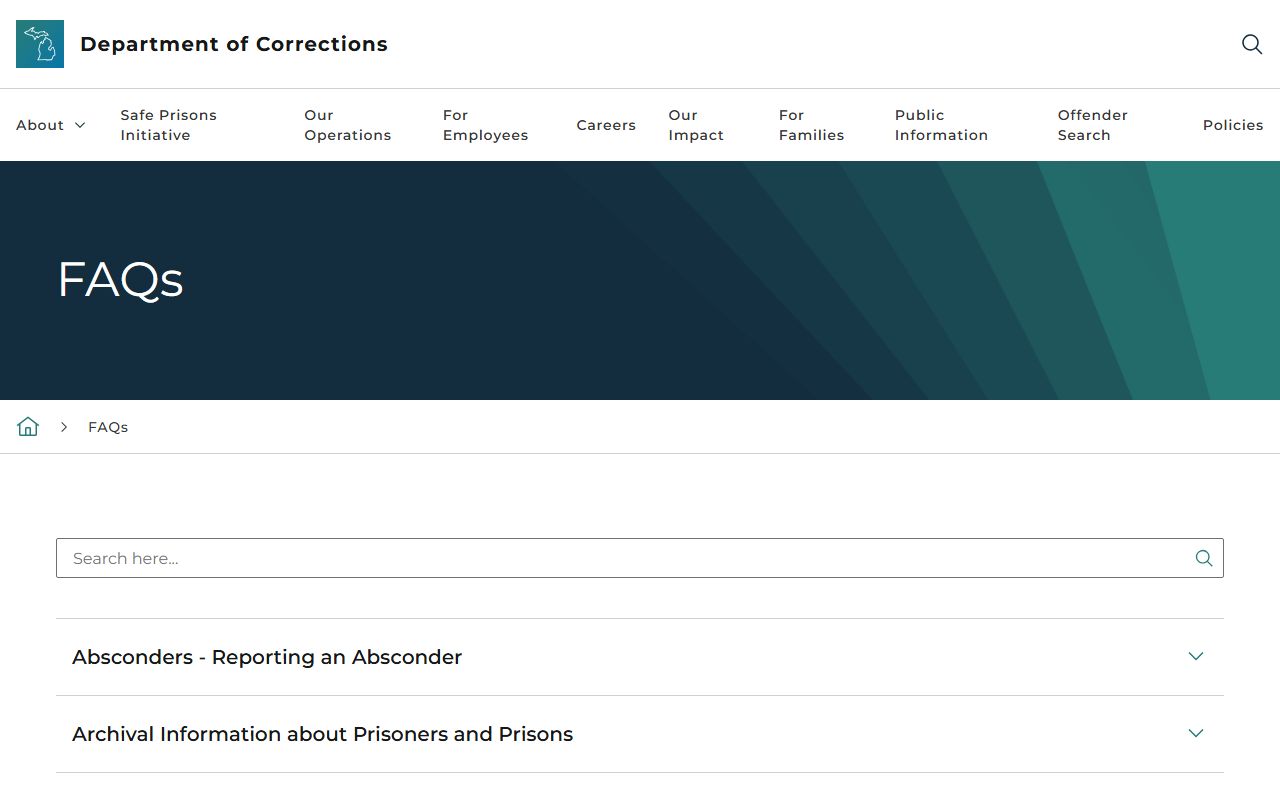
That page helps a reader see where a circuit court felony record ends and a corrections record begins. The court file covers charges, pleas, verdicts, and the sentence itself. Once the sentence starts, custody status and release data live with the state corrections system. The family division has its own support structure too, since the Friend of the Court office enforces support and custody orders that the circuit court issues.
The family division reaches a wide set of matters, including:
- Divorce, separate maintenance, and annulment
- Custody, parenting time, and child support
- Child abuse and neglect proceedings
- Juvenile delinquency within the circuit family division
- Personal protection orders tied to family matters
The Eighth Circuit and the Montcalm Rotation
Ionia County shares its judicial circuit with Montcalm County. The two counties together form Michigan's 8th Circuit, and the bench is not fixed in one courthouse. Most 8th Circuit Court judges and staff alternate weekly between Ionia and Montcalm County. That rhythm is a real local detail, because it changes who is physically in the Ionia courthouse in any given week.
The rotation matters for anyone planning a visit or a filing. A judge who hears a matter one week in Ionia may be sitting in Montcalm the next. Court staff move on the same schedule. Because the county clerk's office in Ionia stays open through that cycle, filings and record requests do not stop when the bench travels. Still, a person who needs to appear before a specific judge should confirm the week that judge is seated in Ionia.
Note: Because most 8th Circuit judges and staff switch between Ionia and Montcalm each week, call ahead before a courthouse visit tied to a specific judge or hearing.
Searching Ionia County Circuit Court Records
Ionia County does not run its own case database. Instead it routes the public into MiCOURT, the statewide case-search system that Michigan courts share. Circuit, district, and probate files each sit under their own court path, so a searcher has to know which court holds the matter before starting. The developer documentation for the search platform shows how deep the field set runs, including filters for case type, judge, offense date, and disposition date, as detailed in the MiCOURT case-search reference.
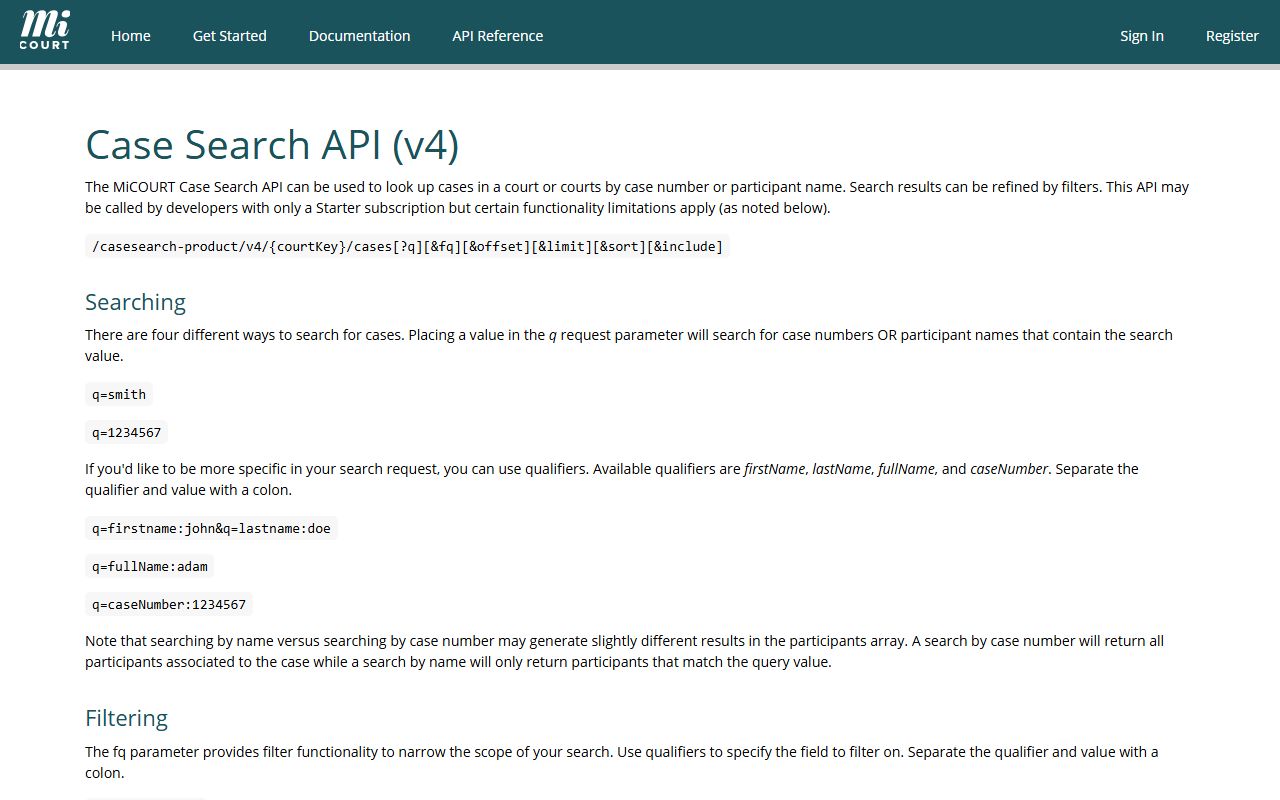
That reference confirms the public search is far richer than the plain county links suggest. A basic lookup can start with a case number or a party name, then narrow by date range or case status. To reach 8th Circuit files, use the circuit court path and accept the terms gate before searching. A short walkthrough keeps the process simple.
- Open the MiCOURT case-search gateway and accept the terms.
- Choose the 8th Circuit Court path for felony, major civil, or family files.
- Search by case number first, or by last and first name.
- Add filters such as case year or status when the result set is too broad.
- If the record does not appear, contact the county clerk or check the court's public docket tools.
Some records will not surface at all. Michigan court rules and statutes keep juvenile, sealed, and suppressed cases out of the public view, and the state's public-records framework under Michigan FOIA governs county administrative files rather than judicial ones. When a case is confidential, the safer statement is that it is unavailable in the public search, not that it does not exist. The Michigan records-management rules control how trial-court files are kept and released.
Ionia County District and Probate Courts
The circuit court is easier to understand next to the courts around it. The 64-A District Court is the lower trial court and the first stop for most criminal and traffic matters in the county. It handles misdemeanor cases from arraignment through sentencing and felony cases from arraignment through the preliminary examination. Once a felony clears that exam, it moves up to the 8th Circuit Court. District court magistrates can set bail, accept bond, take certain guilty pleas, and issue arrest and search warrants.
The Ionia County Probate Court sits beside both. It handles estates, trusts, wills, guardianships, conservatorships, and mental health treatment matters, along with family-court files such as adoptions, emancipations, and name changes. Probate now uses MiFile for eligible case types, so many probate filings run through an e-filing workflow rather than paper alone. Secret marriage records are one unusual local matter the probate court keeps.
Building layout is worth knowing before a visit. The county's new courts facility uses a single secured entrance on Washington Street. District Court sits on the first floor of that facility, while Friend of the Court and Juvenile Court are on the second floor. District Court Probation stays in the basement of the main courthouse. The 8th Circuit Court remains on the second floor of the courthouse at 100 W. Main Street, and the county clerk's counter in the same complex is where circuit filings and certified copies are handled.